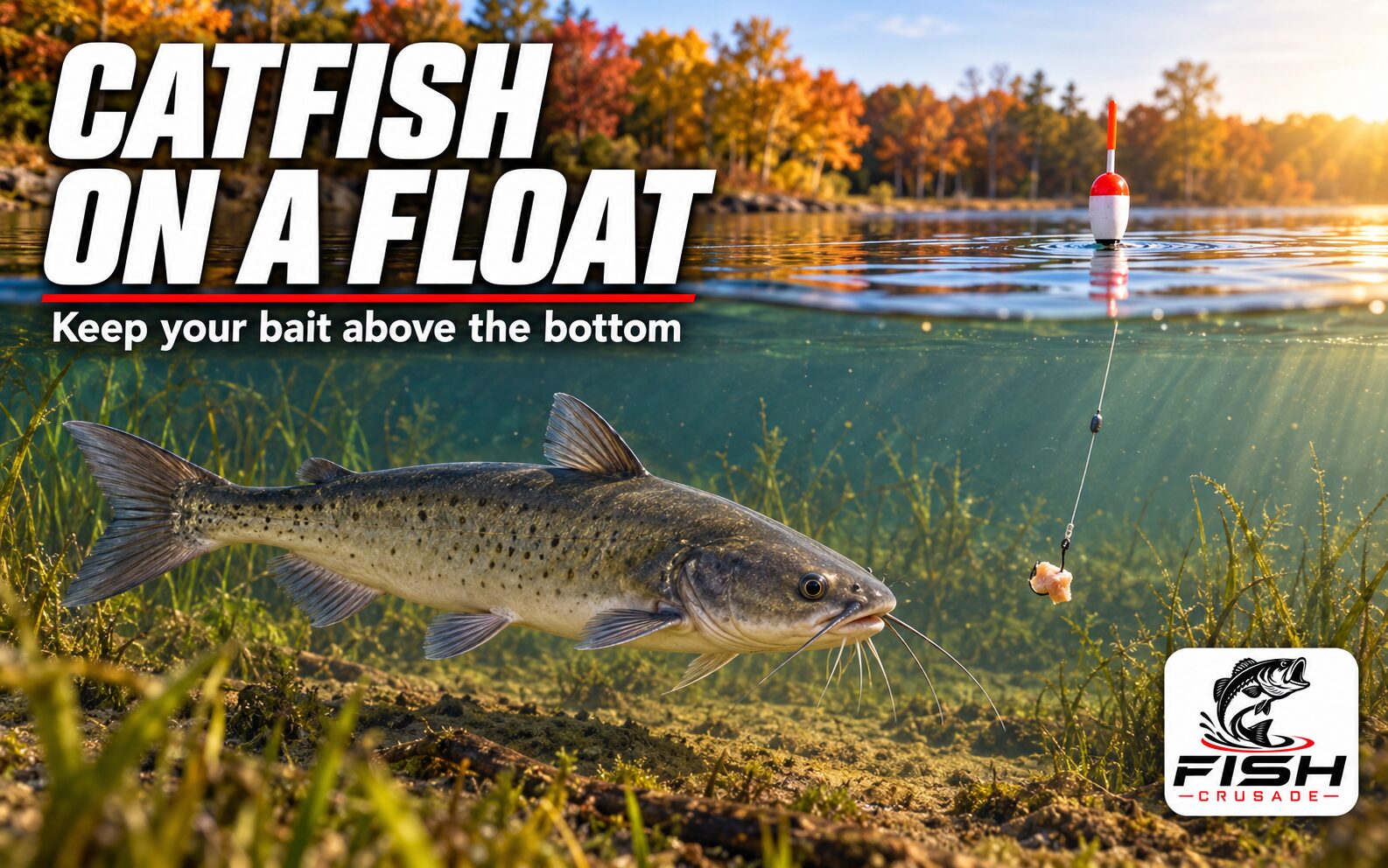
If your bottom rig keeps coming back covered in grass or muck, another cast to the same place may not solve the problem. A float gives you a different presentation: suspend the bait where you want it instead of letting it disappear into soft bottom or vegetation.
This is a channel-catfish option worth knowing, not a claim that every catfish feeds shallow. It is particularly useful when you need to explore the water above cover.
Catfish Do Not Have to Eat on the Bottom
In an August 2023 Wired2Fish demonstration, Kyle Peterson and John Maile fish cut bait beneath slip floats around shallow vegetation. Their setup keeps bait clear of silt and weeds while letting them cover water. The demonstration centers on warm-season fish; applying it in fall should depend on finding active fish in comparable habitat, not on the calendar alone.
The takeaway is presentation control. A slip float lets you alter the distance between float and bait without continually changing the amount of line used for casting. Start by asking where the bait is traveling, then whether that is a useful place for a feeding catfish.
Build Around the Cover
In-Fisherman’s float-rigging guide explains the basic adjustable slipfloat system. Use a float that can support the bait and the weight needed to present it. Match rod, line and hook to the fish and cover you expect. A rig that works in open water may be a poor choice alongside thick wood where a hooked fish has little room to move.
Set the depth so the bait clears the grass or soft bottom you are trying to avoid. Try a cast close enough to observe the rig before sending it farther. If the float is overloaded, it cannot give a useful picture of the bite. If the bait still returns fouled, shorten the setting or choose a cleaner lane.
Peterson and Maile use fresh cut fish in their demonstration. Keep the hook point unobstructed rather than burying it under a bulky piece. Check local bait rules first: a fish that is lawful bait in one state or waterbody may not be lawful in another.
Choose Channel-Catfish Water
Missouri’s Department of Conservation describes channel cats as widespread fish that readily accept varied baits. Its separate advice for blue and flathead catfish is a useful reminder to identify the target. A modest float rig intended for channel cats is not automatically a trophy-flathead setup.
For regional context, the North Carolina Wildlife Resources Commission includes September and October among its better channel-catfish months and points to evening activity. Those are broad tendencies, not a reason to ignore daylight opportunities or changing water conditions.
Test a Float Without Guessing All Evening
- Pick a clean lane. Start beside vegetation or cover where you can keep the bait from snagging.
- Compare depths. Try one setting, then change it deliberately rather than moving the stop at random after every cast.
- Watch the presentation. Wind can move the float faster than you intended. Reposition or use another method if you cannot control it.
- Stay ready. Use a secure rod holder when setting the rod down, and keep the landing net accessible.
A public bank, quiet cove or suitable small-boat spot can provide room to experiment. Keep footing, weather and access in mind, especially after dark. Check harvest rules and fish-consumption advisories before planning a meal, and take discarded line and bait packaging home.