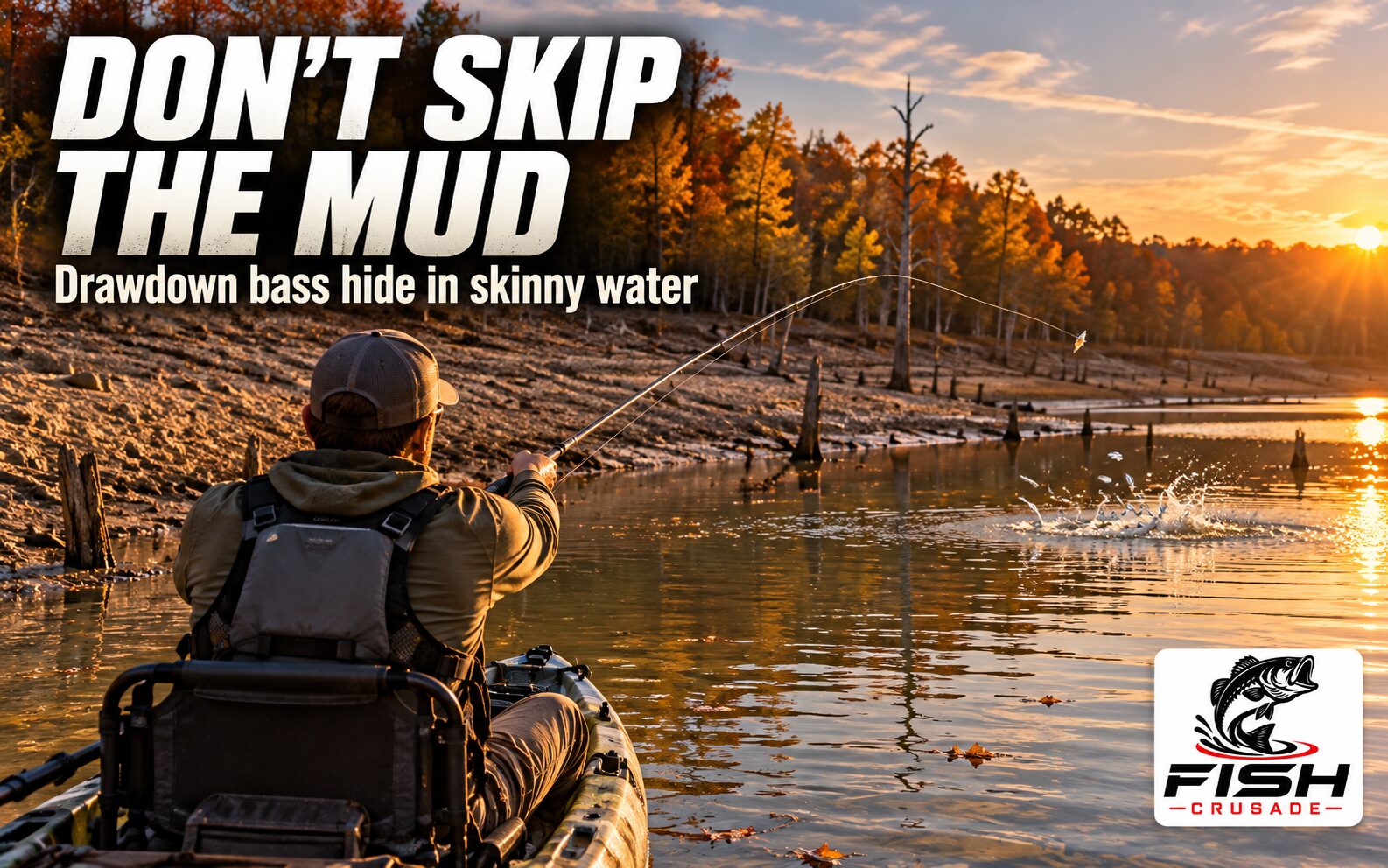
When a reservoir drops toward winter pool, a lot of anglers write off the shallow backwaters. The water looks thin, the banks look muddy, and it is easy to assume the fish pulled out. Here, mud refers to the extremely shallow setting; it does not mean every muddy-water pocket holds bass. A November 18, 2016, piece in Outdoor Life by writer David A. Brown argues the opposite: some of the best fall bass fishing can happen in water so shallow it hardly looks fishable.
The Mud Tip From Kentucky Lake
Brown described heading to Kentucky Lake, the big Tennessee River impoundment, for a photo shoot. Local pro Terry Bolton told him he had been catching bass in the backs of pockets, “in mud.” It sounded odd at first, but the reasoning holds up.
As Outdoor Life explained, the fall drawdown lowers the lake toward winter pool and drains many backwaters. Baitfish end up feeding in very shallow water on the algae that grows on hard structure still under the surface. At the same time, shorter days and cooler nights push bass to feed heavily before winter. Put those two things together, and bass will follow the bait into skinny water.
Many Southeast reservoirs managed with seasonal drawdowns can set up similarly, so this lesson applies well beyond one lake. Check your lake’s current level through its managing agency or utility before you go, since the timing and depth of drawdowns differ from place to place.
A Lipless Crankbait and a Long Cast
The main tactic is to locate shallow bait schools and target them with lipless crankbaits that imitate the forage. Brown recalled a moment during a shoot with Bassmaster pro Keith Combs when they spotted a bass chasing bait so shallow its back was breaking the surface. Combs could not get the boat any closer, so Brown made the longest cast he could with a 1/4-ounce lipless crankbait. It landed about 10 feet from the boil, and the bass moved over and ate it.
That story carries two lessons. First, a compact lipless bait casts a long way and comes through shallow water quickly, which makes it ideal for reaching fish you cannot get close to. Second, in skinny water distance is your friend. Fish in a foot or two of water are already exposed and wary.
Timing and Stealth
The article suggests not dismissing seemingly drained areas, especially from midday until sunset, when the shallow water has had time to warm. As the bait gets more active, bass get more interested.
Stealth matters just as much. Outdoor Life advised anglers to keep their distance and stand still, because rocking the boat sends pressure waves to fish that are already nervous in shallow water. Carrying several reaction baits lets you cover water and capitalize on feeding fish quickly.
How Everyday Anglers Can Try It
This pattern is well suited to the gear most of us already own:
- Kayaks and canoes are quiet and can slip into shallow pockets that bigger boats cannot reach. Stop paddling well short of the target and let the kayak glide to a halt before casting.
- Bank anglers may find drawdown pockets newly reachable on foot. Watch for soft mud, which can be deeper than it looks, and only walk where it is legal and safe.
- Small-boat anglers should idle in carefully and watch for stumps, rocks and newly exposed hazards that are easy to miss at lower water levels.
- Keep it simple. Start with a small lipless crankbait in a forage-matching color and a rod rated for its weight. Adjust tackle and retrieve to the depth and cover; this is a starting setup, not a rule for every situation.
Look for signs of life: flickering bait, small wakes and the occasional boil. When you see activity, make the long cast first rather than moving closer.
Safety and Respect in Low Water
Low water changes the lake you thought you knew. Wear a life jacket, run slowly in unfamiliar water and keep an eye on the weather as fall fronts move through. Mud flats can trap a boat or an angler on foot, so go with a buddy when you can.
Drawdowns can also expose shoreline that belongs to private landowners. Stay off posted property and be courteous to homeowners and other anglers. Handle fish carefully, release them quickly, and if you keep any, follow your state’s current regulations.
The next time the lake drops and the backwaters look like mud, take a closer look. The bass might be closer to the bank than you think.