Fall is one of the best times of year to chase bass on the big reservoirs of the Tennessee River, and it can also be one of the quietest. With many local anglers trading rods for tree stands, the ramps thin out and the good water opens up. In a column published October 22, 2026, on Bassmaster, Elite Series pro Robert Gee laid out how he approaches the seasonal transition on his home river, and his message is simple: find the bait, and you find the bass.
Gee put it bluntly, calling the fall pattern “1,000% bait-related.” Here is what that looks like on the water, and how a Southeast angler in a jon boat, kayak or bass boat can put it to work.
When the Transition Starts
According to Gee, the shift begins once nighttime lows dip under 50°F and the water starts cooling off. When he wrote the column, the water near his home was still above 70°F, so the best of the season was still ahead. The range he likes most is 54 to 64°F, when he says the bigger fish get more active.
That gives everyday anglers a useful yardstick. A basic handheld or graph-mounted thermometer is all it takes. Use his preferred temperatures as a local starting point rather than a universal rule. Bait location, current and conditions still matter, and a thermometer alone cannot predict how many fish you will catch.
Shad Clouds and Current Breaks
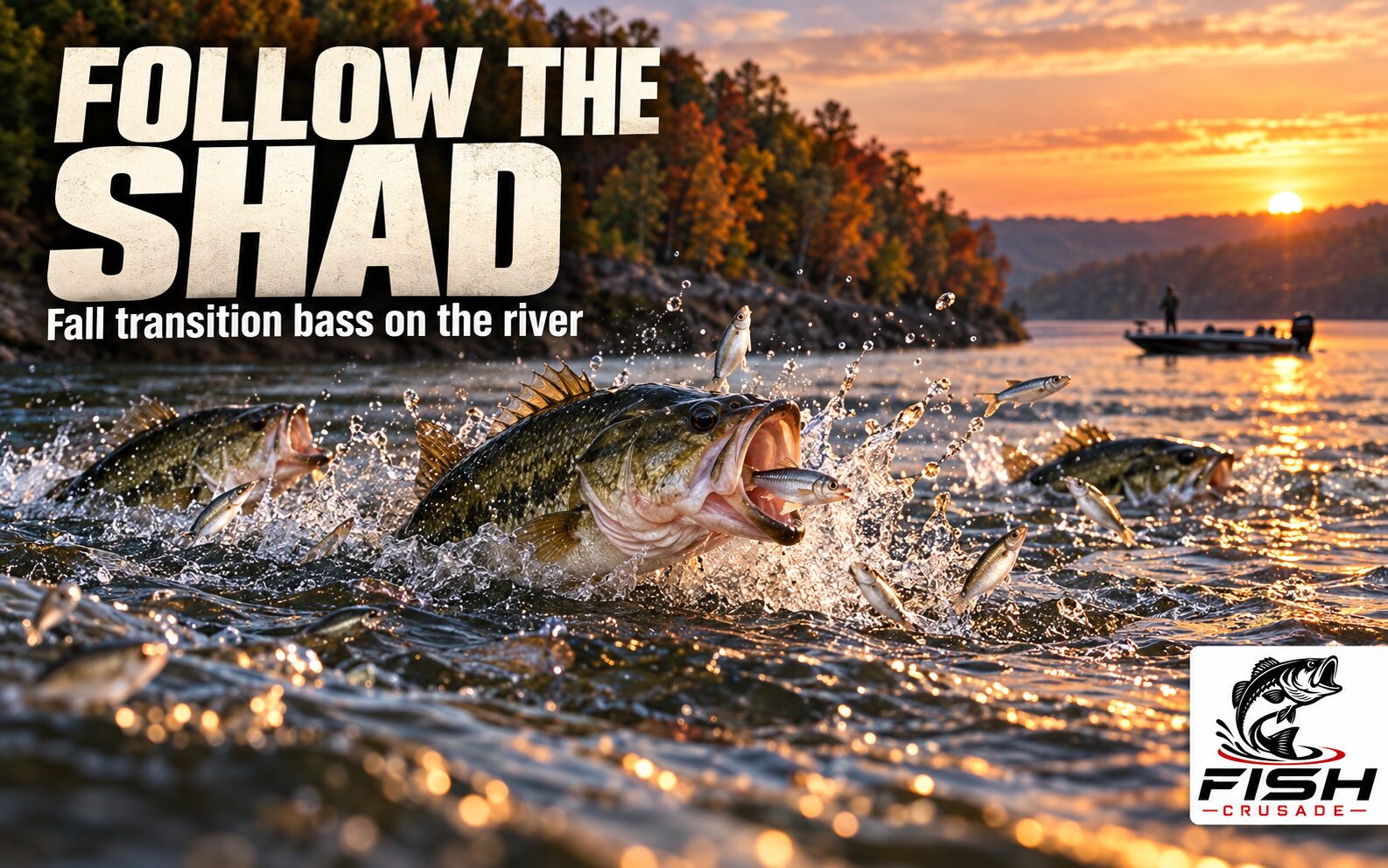
The engine behind the whole pattern is young-of-the-year shad. Gee describes them gathering in clouds that can stretch bank to bank across the main river channel. Bait tends to collect where the current eases up, which is why both creeks and the main lake can hold fish.
Bass, in turn, set up on current breaks. Gee encourages anglers to think bigger than one small eddy tucked against a bank. On a river system, current can hit a bank and break up into a seam that runs a mile or two. Where the river bends, the flow pushes bait into predictable spots, and schooling bass follow it there to feed.
For an angler with a smaller boat or a kayak, this is good news. You do not need to run the whole lake. Pick a bend or a creek mouth you can reach safely, watch for bait on your electronics or on the surface, and study how the current is moving across it. Working one stretch well often beats burning fuel looking for the perfect spot.
Pick Your Days and Your Hours
Gee likes bright sun mixed with clouds, a moderate breeze and some water movement. He avoids slick, calm days, when he finds bass seem more aware of an angler nearby. A little chop breaks up your outline and helps your lure look natural.
Early in the transition, mornings and evenings are still the prime windows. Gee says evenings are especially strong, and the final two hours of daylight can be excellent as the days get shorter. That is welcome news for anyone who fishes after work or school pickup.
His column does not name specific lures or depths, so let the bait guide you. Anglers commonly match fall shad with baits that resemble small, silvery baitfish and can be worked at the depth the shad are holding. When fish are busting on top, something you can cast a long way and reel quickly tends to shine.
Keep Moving Until You Find Them
If the bite is slow, Gee’s advice is to keep moving. Fish are feeding somewhere, and once you find a school there are usually plenty of them. He said it had been difficult to catch 7 to 15 fish in late summer, compared with the 20- to 30-fish days he was experiencing when he wrote the October 22 column. Those are his personal reports, not a catch forecast for every angler.
A few points worth keeping in mind before your next trip:
- Watch the thermometer. Note water temperature each trip and look for that mid-50s to mid-60s window.
- Start where current slows. River bends, creek mouths and long current seams are high-percentage water.
- Hunt the bait first. Surface flickers, diving birds or clouds on your sonar point the way.
- Fish the last two hours. Shorter days concentrate the evening feed.
Fish It Safely and Courteously
Fall on the river brings cooler air, stronger current in places and, on some days, rising wind. Wear a life jacket every time you are on the water, especially in a kayak or small boat around main-channel current. Let someone at home know where you are launching and when you plan to be back.
Schooling fish can draw a crowd. Give other boats and bank anglers plenty of room, and avoid running up on a school someone else is already working. If you keep a few fish for the table, stay within your state’s legal limits, and handle the rest gently so they can fuel the winter bite for everyone.
The fall transition is a season of abundance on Southeast rivers. Slow down, read the water, and enjoy the time outdoors with the people who matter most.