Fall turnover has a bad reputation. Plenty of anglers hear the word and decide to stay home. But in a December 9, 2024, piece for In-Fisherman, writer David A. Brown talked with Lake Fork guide and Bassmaster Elite Series pro Lee Livesay, who sees the turnover period differently. As Livesay put it, “The turnover is a great time to just go fishing.”
The trick is understanding what the lake is doing and choosing an approach that keeps up with fish that are on the move.
What Turnover Actually Is
Through the summer, many lakes stratify into a warm upper layer and a cooler lower layer separated by the thermocline. In fall, cooling makes the upper water denser and reduces the temperature difference between layers, allowing wind and convection to mix the water more deeply. That mixing shifts oxygen levels and scrambles where bass and baitfish want to be. Livesay told In-Fisherman the change unsettles both the bass and the baitfish.
On his East Texas lakes, Livesay told In-Fisherman, turnover usually comes from late September into early October, though a long run of heat can delay it. Cold fronts and nighttime lows in the mid-50s are what cool the surface enough to start the flip. Livesay described a transition of roughly a couple of weeks on his waters; that duration is not a fixed rule for every lake. Mixing redistributes dissolved oxygen through the water column.
Seasonally stratified Southeast reservoirs can undergo similar mixing, but its timing and duration depend on lake depth, weather and water movement. Shallow, frequently mixed waters may not have a distinct fall turnover. The source mentions surface film and bubbles as possible clues; neither proves turnover by itself.
Where the Bass Go
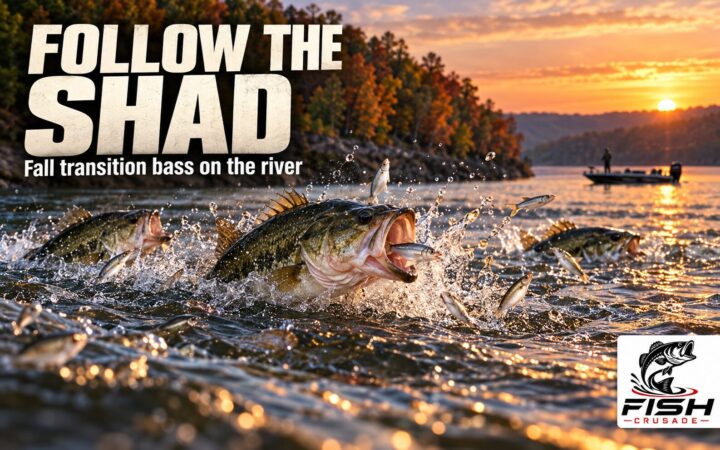
During turnover, baitfish suspend heavily, and bass tend to either school in open water or cruise the banks. The article explains that deep schools broken up during the transition often reform into roaming groups the article calls wolf packs. These groups patrol grass lines, wood and other ambush points, pick at rocks for crawfish, or chase bluegill and gizzard shad into the shallows.
Fish can still be caught deep, but they are more scattered and more mobile than in summer. That is the key insight: since bass can be almost anywhere, the angler who covers water and tries less obvious spots has the edge.
Livesay’s Go-To Approach
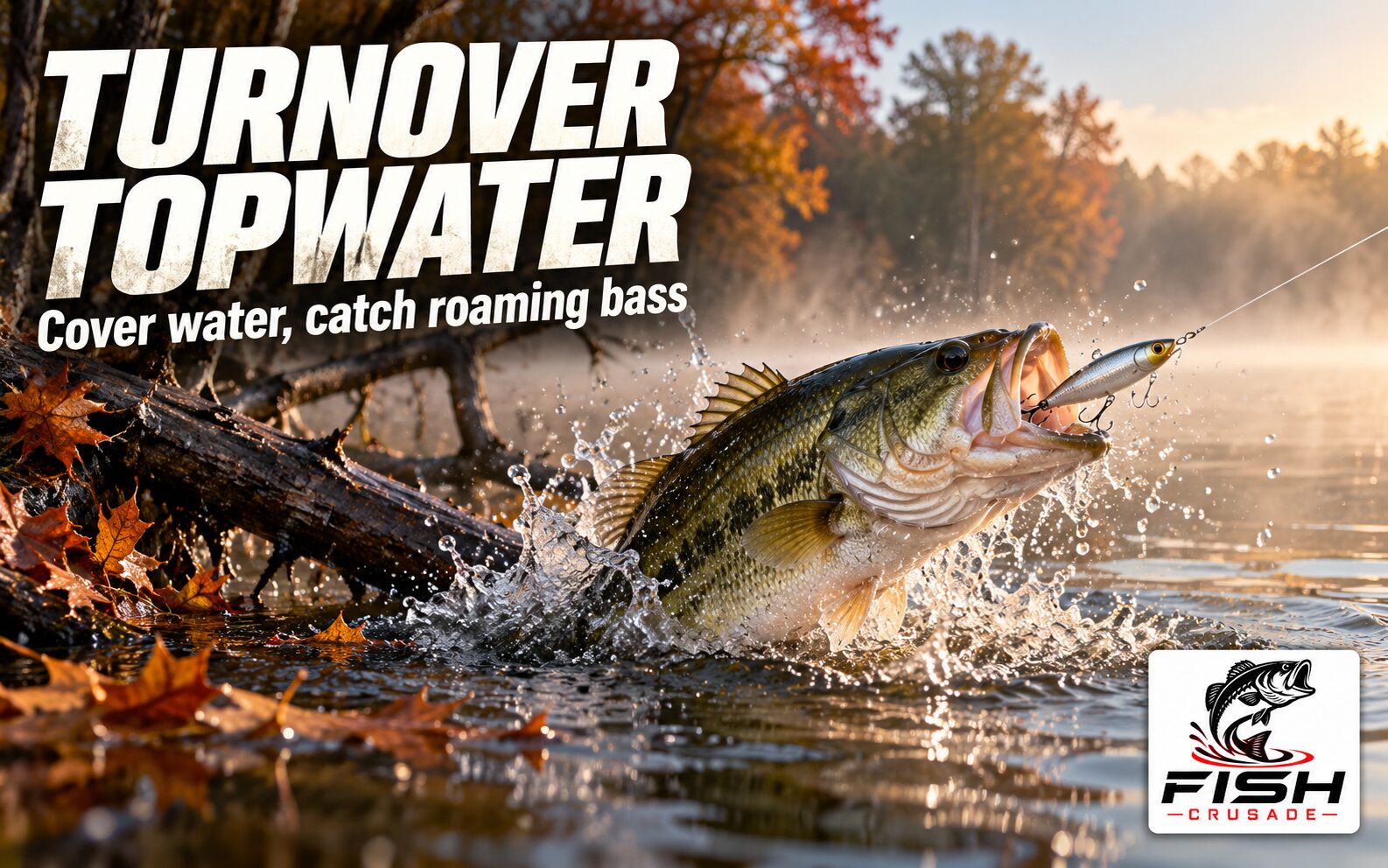
Livesay’s favorite plan is to move shallow and throw a walking topwater. He makes very long casts and uses a fairly quick retrieve, giving fish little time to study the bait. When he reaches late-season bream beds, he slows down. Bream beds, laydowns, rocks and schooling fish are all on his list of targets.
Beyond the topwater, the article notes that squarebill crankbaits, swimbaits and most moving baits also work during this period. The common thread is that they let you cover ground and trigger reaction strikes from roaming fish.
Putting It to Work From the Bank, Kayak or Small Boat
You do not need a big rig to take advantage of this. Here are a few ways an everyday angler can apply the turnover lessons:
- Bank anglers: Walk the shoreline rather than parking at one spot. A walking topwater or squarebill can help search accessible water; choose a lure that suits the cover and avoid casting treble hooks into dense vegetation or branches.
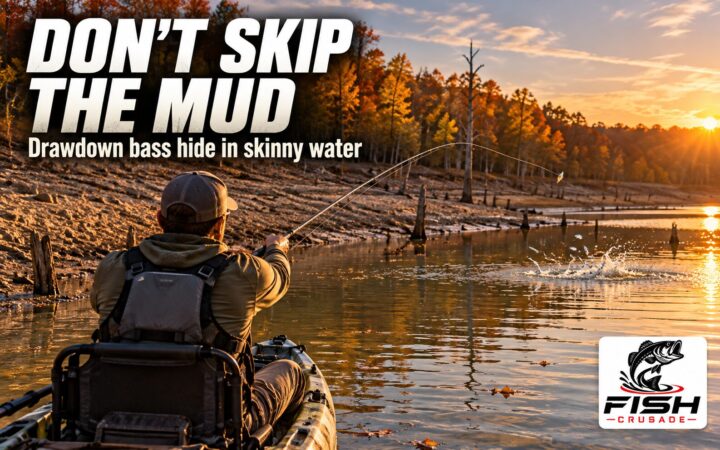
- Kayak anglers: Drift or paddle slowly along grass edges and laydowns, making long casts ahead of the kayak to keep from spooking fish in shallow water.
- Small-boat anglers: Hit a series of quick stops on points, pockets and wood. If nothing happens after a short stretch, move on.
Also, be patient with yourself. Turnover fishing can be streaky. One stretch of bank may be empty while the next holds a whole pack of fish. Treat each stop as a test and keep notes on where the bites came from.
A Good Season to Share
Cooler fall days are a fine time to bring along a child, a spouse or a friend who is new to fishing. Topwater strikes are exciting to watch and easy to understand. Make sure every passenger wears a life jacket, and keep an eye on fall cold fronts that can bring sudden wind.
When you catch a fish, keep it in the water as much as possible, support its body for a quick photo and release it carefully. If you keep any, follow your state’s current size and creel limits. Respect private docks and property along the shoreline, and give fellow anglers room on busy weekends.
Turnover may look messy on the surface, but it is also a reminder that the lake is resetting for winter. Get out there, keep moving, and enjoy the change of seasons.