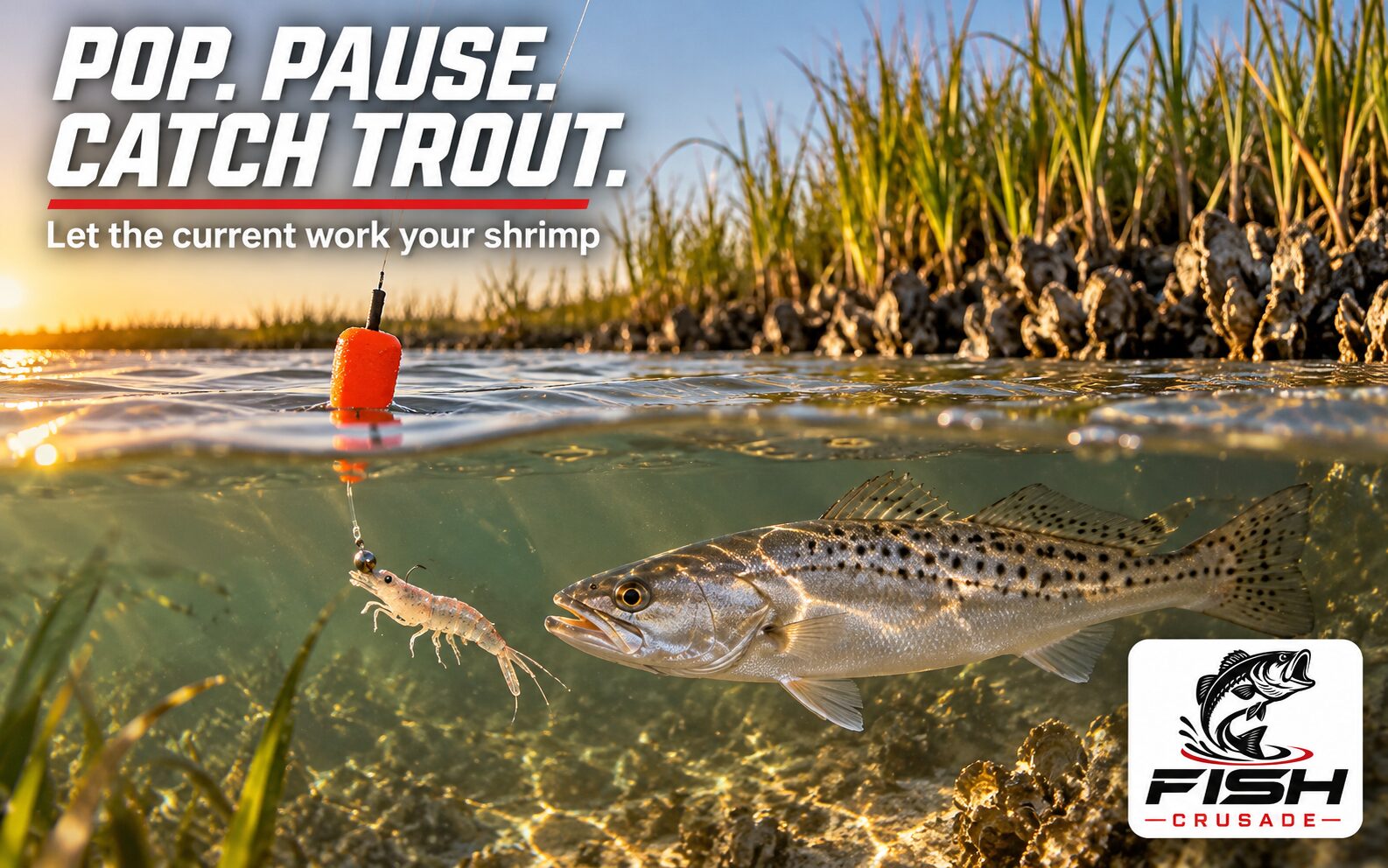
A popping cork is easy to notice and easy to overwork. The noise may help draw attention, but the shrimp or jig below it still has to reach a fish. Sometimes a better drift and a quieter pause are more useful than another hard snap of the rod.
For speckled trout, also called spotted seatrout, think of the rig as a way to place a small meal in moving water. The cork is only part of the presentation.
Match the Leader to the Water
Sport Fishing’s guide to popping corks, updated in April 2024, explains how the float adds sound while moving the offering beneath it. The captains interviewed use different leader lengths, materials and cork styles according to depth, clarity and cover. There is no single arrangement for every marsh creek.
Begin with enough leader to put the offering in the water you intend to fish while keeping it clear of oysters or other snags. If the rig continually hangs up, change the depth setting, drift or location. Simply pulling harder on the cork does not fix a lure dragging through shell.
An artificial shrimp is a convenient starting point because you can repeat casts without replacing live bait after every bite. A small jig can also work. Keep the rig simple enough to cast and observe comfortably, particularly from a kayak or a bank with limited room.
Send the Offering to the Fish
In Carolina Sportsman’s Lowcountry feature, guide Rick Percy describes fishing current breaks around oyster structure and island points as the tide rises. Rather than dropping a rig directly onto the holding area, he uses the flow to bring it there. That is a South Carolina guide’s local approach, not a promise that every inlet fishes best on an incoming tide.
Watch how the cork actually travels. A cast landing in apparently good water may sweep away from the edge you meant to cover. Shift the casting angle before assuming the lure is wrong. Local wind, current and the amount of water over the structure can change that path during the session.
Pop, Then Give It Time
The Sport Fishing article also notes that less noise can be helpful around wary fish. Salt Water Sportsman’s rigging tutorial likewise uses pauses between pops. After a pop, allow a pause so the offering can settle. Compare a gentler cadence with your original one. Keep enough contact to respond to a take without towing the whole rig unnaturally through the drift.
Do not assume the loudest cork is always the best one. The useful question is whether fish can find and take the offering in the conditions in front of you.
Land the Fish With the Release in Mind
Florida FWC’s fish-handling guidance recommends tackle strong enough for a prompt landing, wet hands and minimal time out of water. Have the dehooking tool ready before the bite. Support the fish horizontally rather than hanging its weight from the jaw, and avoid touching the gills.
Hook-setting depends on the terminal tackle. An artificial shrimp on a jig hook is different from natural bait on a circle hook. FWC advises reeling into a fish on a circle hook rather than using a hard striking motion. Identify the rig you are using before teaching a newcomer how to respond.
Check the current state and waterbody rules before keeping speckled trout. For the next trip, bring a small selection of offerings, pay attention to the drift, and change one part of the presentation at a time. A cork is most useful when you can explain what the bait beneath it is doing.